
It’s not done “routinely” — it’s done for a reason
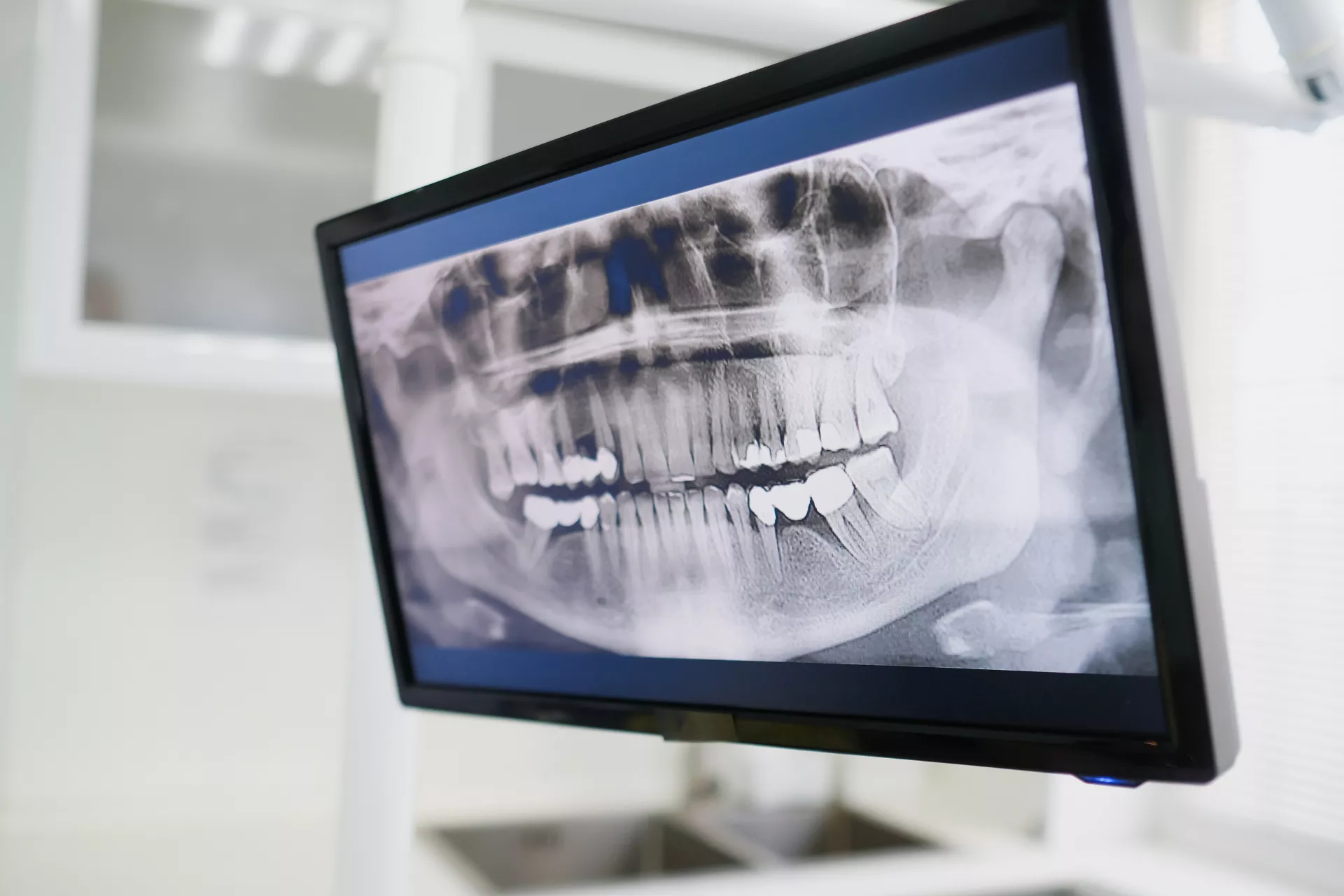
There is a common misconception that dental X-rays are routinely taken at every visit. In reality, the dentist only recommends an X-ray when the clinical examination does not provide enough information to understand what is going on. In other words, X-rays reveal what the eye cannot see.
Cavities between teeth, root-tip infections, bone loss, and problems hidden beneath old dental work—these are situations that appear normal on the surface but have a different story beneath.
When is an X-ray recommended?
There are several situations in which a doctor may consider an imaging test to be useful:
- Toothache with no apparent cause upon clinical examination
- Suspected tooth decay between teeth or under an existing filling
- Assessment of the condition of the bone surrounding the teeth (in cases of periodontal disease)
- Planning a root canal treatment
- Preparing for a dental implant
- Checking the position of an impacted tooth (e.g., wisdom teeth)
- Monitoring an ongoing treatment
- General dental evaluation of a new patient
Not all medical visits require an X-ray. But when your doctor recommends one, it’s because the information obtained can change or confirm the course of treatment.
What types of X-rays are used in dentistry?
The most common types are:
- Periapical X-ray — shows 2–3 teeth and the area at the root tip. Useful for deep cavities, infections, and root canal treatments.
- Panoramic X-ray (OPG) — shows the entire set of teeth, both jaws, and the temporomandibular joint. It provides an overview.
- CBCT (cone-beam computed tomography) — Detailed 3D images. Used for implant planning, evaluating impacted teeth, or complex surgical cases.
The type of X-ray recommended depends on what information the doctor needs for that particular case.
Is a dental X-ray safe?
The radiation dose from a dental X-ray is very low. A periapical X-ray delivers a dose comparable to a few hours of exposure to natural background radiation. A panoramic X-ray delivers a slightly higher dose, but is still considered safe for diagnostic purposes.
Standard protective measures (lead apron) should be taken, and unnecessary X-rays should be avoided. The doctor should only recommend the test when the diagnostic benefit justifies the exposure.
What are the benefits of having the X-ray done at the same clinic?
When a clinic has its own imaging facility, the process is simpler for the patient. You don’t have to go to another location, wait for the results, and then return. The clinical evaluation and imaging tests can be performed during the same visit, and the doctor can interpret the results immediately, in the context of the examination they have just conducted.
At Neodent Tecuci, the clinic has its own dental radiology lab. Recommended imaging tests can be performed on-site, eliminating the need for additional trips, which streamlines the patient’s journey from evaluation to diagnosis.
An X-ray is not an end in itself
An X-ray is a diagnostic tool. It is not performed simply because “it has to be done,” but because the doctor needs information that a clinical examination alone cannot provide. When it is recommended, there is a clear reason for it. When it is not necessary, it is not performed.
This article is for informational purposes only and is not a substitute for medical consultation. Every clinical situation is different, and recommendations may vary depending on the doctor’s assessment.

 Romanian
 English
 Italian